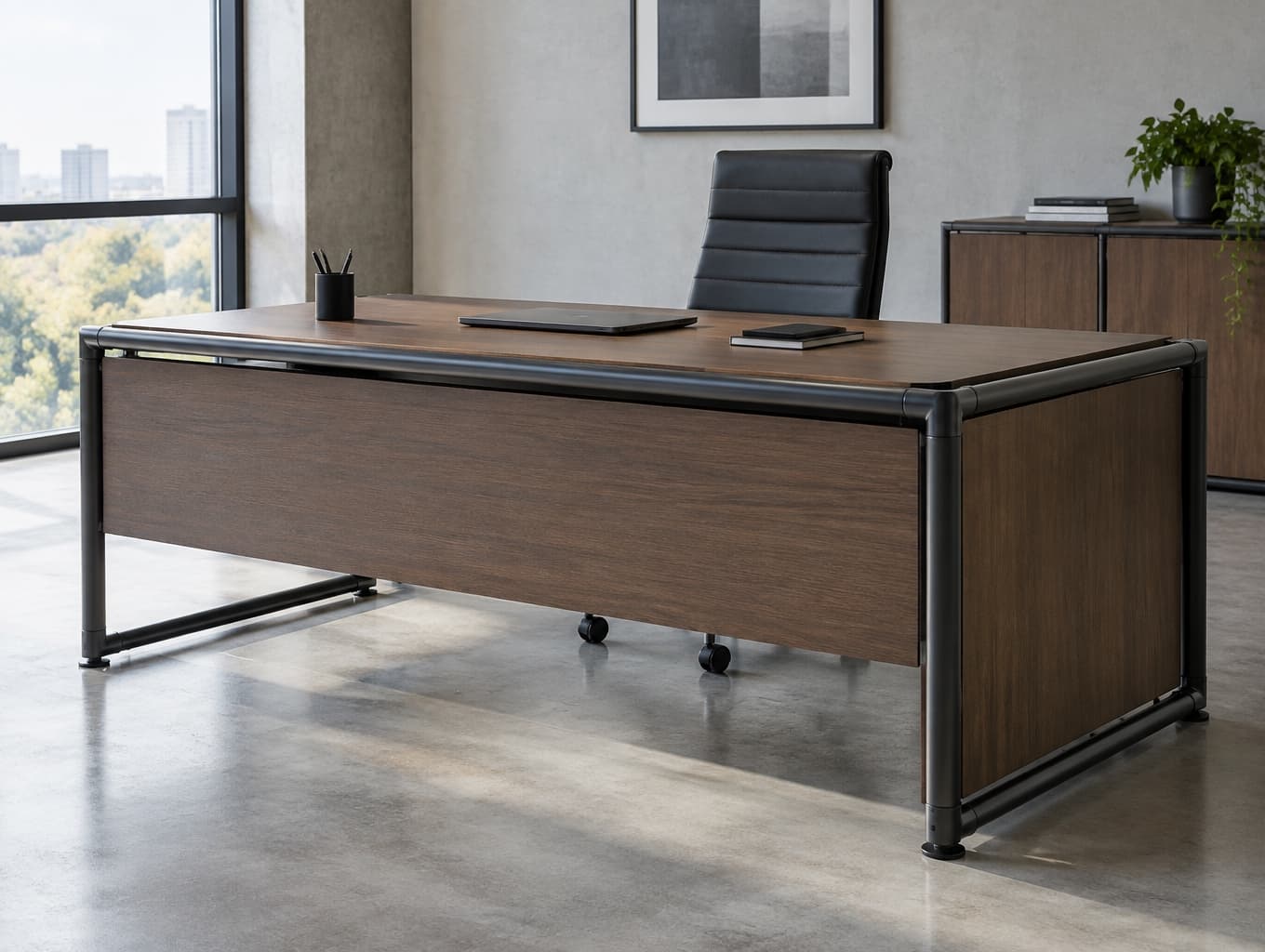
A Functional Desk with Industrial Character
Find products from this interior
Lighting, furniture, and decor - with prices and links to stores

Design Brief
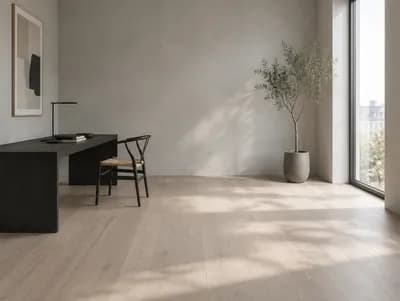
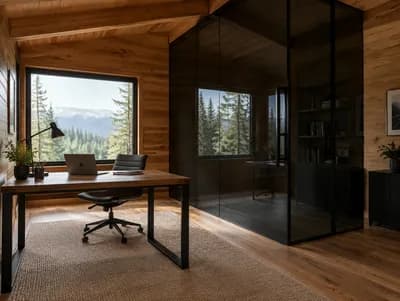
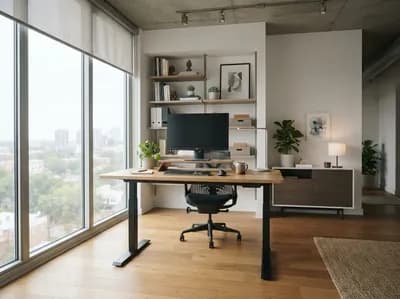
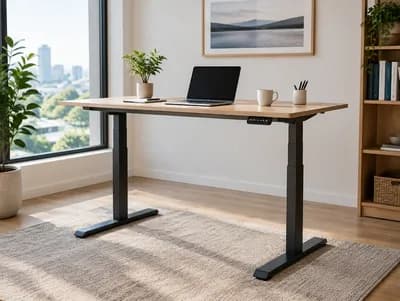
Photorealistic product-focused design concept for an executive desk in an office, industrial style. Make the desk the clear focal point: a structural frame of metal tubing with MDF cladding, expressed as a substantial, functional executive workstation. Show the relationship between the tubular frame and clad panels clearly, with believable joinery and proportions, in a restrained office setting with natural daylight. Negative constraints: Watermarks, logos, labels, captions, overlays, diagrams, infographics, distorted perspective, low-resolution artifacts, extra openings, split-screen, multi-panel layouts, people, pets.
FAQ
This substantial workstation works best in a private office or generous home office with enough clearance to move around the desk and open storage. Allow roughly 90 centimeters behind the chair and keep the desktop proportionate to the room, so the metal frame remains a focal point without overwhelming circulation.
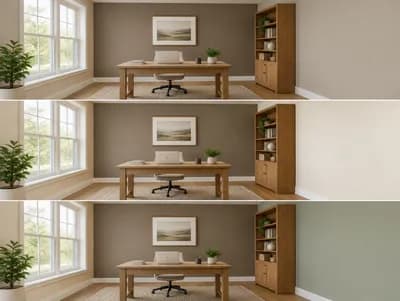
The design expresses its construction through a visible frame of metal tubing paired with broad MDF-clad panels. Restrained finishes, practical proportions, and clear junctions make the contrast feel purposeful rather than decorative. Natural daylight and a quiet office backdrop help reveal the materials and give the workstation a confident, functional character.
Yes. The substantial surface can support a monitor, documents, and everyday work essentials, while the frame-and-panel construction gives the desk a robust visual presence. Executives should plan cable access, task lighting, and ergonomic seating early, then confirm the final desk dimensions suit their equipment and preferred working posture.
Start with a dimensioned frame plan and select metal tubing appropriate for the intended span and load. Add MDF cladding with durable, office-suitable edging, and use concealed fixings where practical. Prototype the joinery at panel intersections, provide cable-management routes, and test stability before applying the final finish.